
What if I told you there’s a place an hour from London where people don’t lock their cars or homes? Where children cycle to school unsupervised, where you can work in the morning and sail to France for lunch, and where moving to Guernsey means keeping significantly more of what you earn—legally, quietly, and without drama.
Why the rich are moving to Guernsey isn’t just about tax efficiency, though that certainly matters. It’s about something more fundamental: a lifestyle that combines genuine safety, exceptional quality of life, and financial structures that reward productivity rather than punish it.
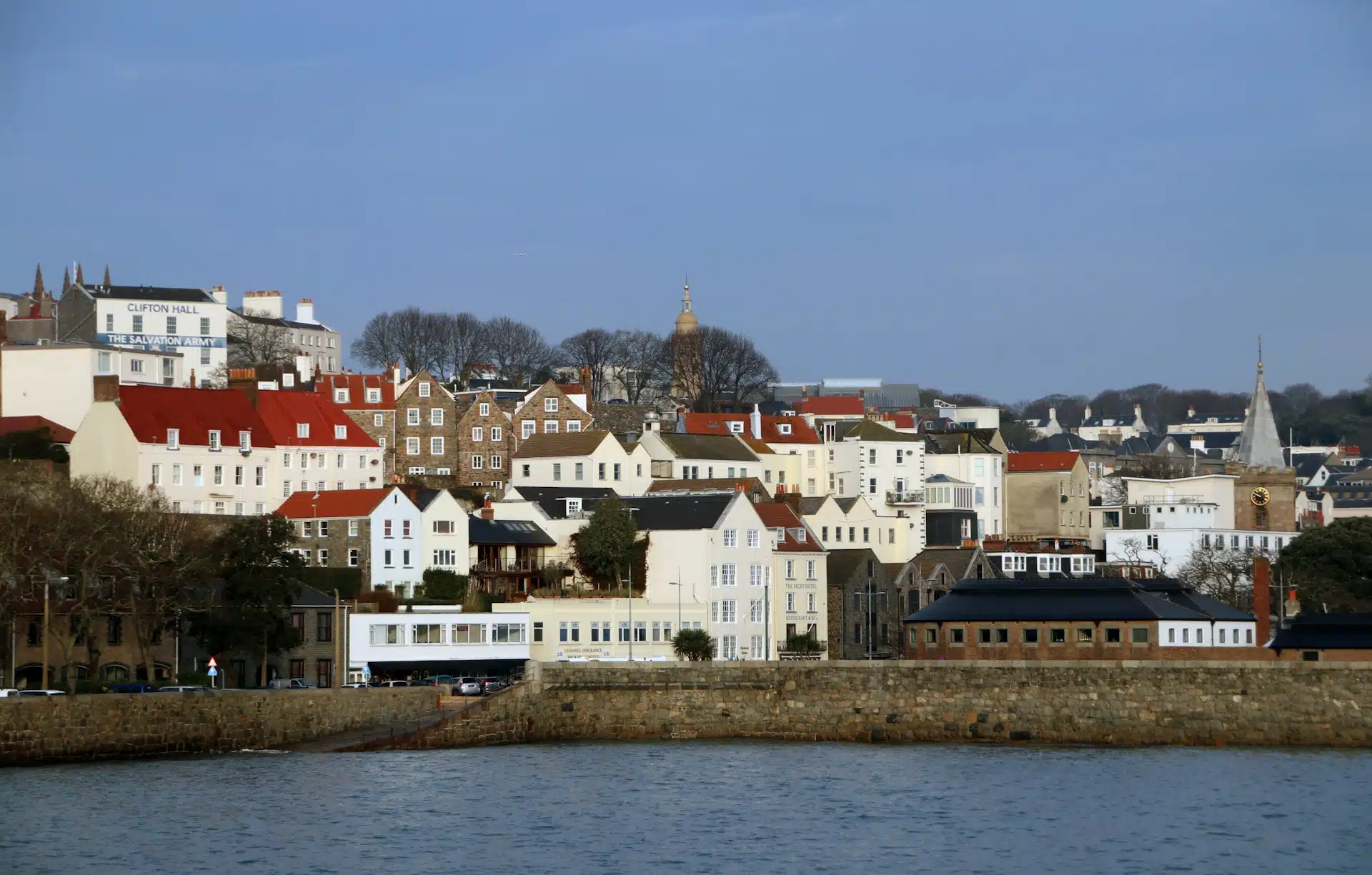
Guernsey is a British Crown Dependency sitting in the English Channel, just off the Normandy coast. With just over 63,000 residents across 25 square miles, it’s tiny compared to most cities. Yet this small island offers world-class infrastructure, top-tier healthcare, excellent schools, and one of the safest environments in Europe.
The wealthy are relocating here not because they’re fleeing something, but because they’re choosing something better. The combination of Guernsey tax benefits, coastal lifestyle, and genuine community creates an environment that’s increasingly difficult to replicate elsewhere.
Recent UK tax changes have accelerated interest dramatically. Non-dom reforms, inheritance tax adjustments, and increased scrutiny of wealth have prompted families and entrepreneurs to reassess where they actually want to live.
What they’re discovering is that living in Guernsey isn’t a compromise—it’s an upgrade.
Where Is Guernsey and Why Is It Different?
Guernsey sits in the English Channel between England and France, closer to the Normandy coast than to mainland Britain. It’s one of the Channel Islands, alongside Jersey, Alderney, Sark, and Herm.
British Crown Dependency status means Guernsey isn’t part of the UK, nor is it part of the EU. It has its own parliament (the States of Guernsey), its own legal system, and critically—its own tax system. The UK handles defence and international relations, but Guernsey governs itself internally.
This constitutional arrangement creates extraordinary flexibility. Guernsey sets its own tax policy without Westminster interference. It makes its own laws suited to island circumstances. It controls immigration and housing independently.
The result? A jurisdiction that’s chosen a fundamentally different approach to governance—one focused on enabling prosperity rather than redistributing it.
For context, similar Crown Dependencies like Jersey and the Isle of Man operate under comparable frameworks, though each has distinct characteristics. Guernsey has positioned itself as perhaps the most lifestyle-focused of these jurisdictions.
According to Visit Guernsey’s official statistics, the island receives hundreds of thousands of visitors annually, many of whom later become residents after experiencing the quality of life firsthand.
For those familiar with other tax-efficient jurisdictions, Guernsey stands out for combining tax advantages with genuine lifestyle quality rather than being purely a financial structure.
A Place Built on Trust: The Safety That Changes Everything
The first thing long-term residents mention isn’t tax—it’s safety. Guernsey has some of the lowest crime rates in Europe, creating a trust-based society that feels genuinely different from mainland Britain.
People leave their cars unlocked. Homes remain unlocked during the day. Children cycle independently to school without parental supervision. These aren’t aspirational goals—they’re daily reality.
One resident I spoke with mentioned stopping work at 5pm, cycling five minutes to his boat, and sailing for the evening. Another described walking barefoot from her front door to white sand beaches. These aren’t wealthy individuals hiding behind gates and security—they’re people living openly in a community where trust is the default.
The cultural shift is profound. In London, you’re constantly alert—checking your surroundings, securing belongings, managing risk. In Guernsey, that background anxiety simply doesn’t exist. You can focus on living rather than defending.
For families, this matters enormously. Your children can explore independently without constant supervision. They can cycle everywhere. They can experience genuine childhood freedom that’s become increasingly rare in urban Britain.
This level of safety isn’t accidental—it’s the result of small-island dynamics where everyone knows everyone, combined with effective policing and a culture that values community cohesion.
Similar to the safety described in Sark’s car-free environment, Guernsey’s low crime creates lifestyle benefits that compound over time, reducing stress and improving quality of life measurably.
The Lifestyle That’s Impossible to Replicate Elsewhere
Guernsey lifestyle centers around the sea. This isn’t marketing—it’s geographic reality. You’re never more than a few miles from coastline, and most commutes take 5-10 minutes maximum.
The daily rhythm is fundamentally different: You can work from home or a proper office with excellent internet infrastructure. Lunch breaks mean walking to coastal paths or beaches. After work, you’re kayaking, paddle boarding, fishing, or sailing—not sitting in traffic for an hour.
One resident described his routine: finish work, sauna at home, then 25 meters to the sea for a swim. This happens year-round, not as an occasional treat.
The island offers Michelin-recommended restaurants, boutique cafés, and exceptional fresh local produce. Surf and Turf showcases locally sourced products that rival anything in mainland Britain. Notably, there’s no McDonald’s, no KFC, no corporate fast-food chains—deliberately maintained to preserve island character.
Community culture is strong. With 63,000 residents, you can’t be anonymous, but that creates genuine connections. People look out for each other. Volunteering is common. Local events bring the community together regularly.
The outdoor lifestyle isn’t optional—it’s central to island culture. If you hate water, dislike outdoor activities, or prefer urban entertainment, Guernsey will feel limiting. If you love coastal living, value community, and prioritize natural environment over metropolitan amenities, it’s paradise.
Weather matters: The Channel Islands enjoy a microclimate warmer than mainland Britain, with everything remaining green year-round according to long-term residents. Winters are milder, though Atlantic weather can still bring storms.
For those who’ve explored luxury coastal properties elsewhere, Guernsey offers similar coastal access but with the added benefit of tax efficiency and genuine community.
The Tax System That Quietly Attracts Wealth
Let’s address what brings many people to research Guernsey tax benefits initially, even if it’s not why they ultimately stay.
What taxes don’t exist in Guernsey:
- No VAT – The 20% consumption tax UK residents pay on most purchases simply doesn’t exist
- No capital gains tax – Investment profits remain entirely yours
- No inheritance tax – Your estate passes to heirs without government intervention
What taxes do exist:
- Flat 20% income tax – Applied to income regardless of source or amount
- Social insurance contributions – Similar to UK National Insurance
- Document duty – Property transaction taxes (similar to stamp duty)
The income tax cap system is what captures serious attention. For qualifying residents, total income tax liability can be capped at £320,000 annually (excluding property income and pensions). This means regardless of how much you earn, your maximum income tax bill is £320,000.
For new residents, there’s a special incentive: a £60,000 tax cap for the first four years, provided you purchase an open market property generating at least £50,000 in document duty. In practice, this means buying property valued around £1.4 million or above.
Example scenario: If you’re earning £2 million annually from business activities, your Guernsey income tax liability would be £320,000 (or £60,000 during the first four years). In the UK, that same income might incur £800,000+ in income tax alone, before considering National Insurance, capital gains, and other taxes.
The States of Guernsey official website provides detailed tax information, though individual circumstances vary significantly and professional advice is essential.
This isn’t tax evasion or aggressive planning—it’s simply choosing a jurisdiction with different tax policies. The UK explicitly recognizes Crown Dependencies as separate tax jurisdictions.
For context, understanding how high-net-worth individuals structure wealth becomes even more relevant in low-tax jurisdictions where retained capital can be deployed efficiently.
Critical disclaimer: Tax outcomes depend entirely on individual circumstances, residency status, source of income, and ongoing compliance. This information is general only. Always seek professional tax advice from advisors qualified in both UK and Guernsey tax law before making any decisions.
Guernsey’s Unique Housing Market: Scarcity Creates Value
Guernsey housing market operates unlike anywhere else, and understanding this is essential before considering relocation.
The Two-Tier System:
Local Market – Reserved for Guernsey residents with longstanding connections or specific employment qualifications. This market has more properties available but strict qualification criteria.
Open Market – Available to anyone regardless of background. This is what relocating individuals focus on. Here’s the challenge: only 1,600 properties total qualify as open market.
Think about that. In a population of 63,000, with increasing international interest, only 1,600 properties can be purchased by newcomers. Basic supply and demand means these properties command premium prices.
Guernsey open market property ranges from historic Georgian townhouses in St Peter Port to modern clifftop villas with panoramic sea views. Properties typically feature large gardens, exceptional privacy, and views—either of the sea, countryside, or town. Build quality is generally excellent, reflecting both island building standards and the premium market.
Recent UK tax changes, particularly non-dom reforms and inheritance tax adjustments, have accelerated demand significantly. Families and family offices exploring relocation alternatives find Guernsey’s limited inventory particularly attractive for privacy and exclusivity reasons.
Property investment works differently here: Document duty (property transaction tax) is higher than UK stamp duty, but ongoing costs are lower due to no inheritance tax implications. Properties tend to hold value well due to genuine scarcity, though liquidity is lower than mainland markets simply due to smaller buyer pools.
For those familiar with UK luxury property markets or international property acquisition, Guernsey requires adjusting expectations around inventory levels and transaction timescales.
How Relocation to Guernsey Actually Works
Relocating from UK to Guernsey is straightforward for British and Irish citizens due to the Common Travel Area—a reciprocal arrangement covering the UK, Ireland, Isle of Man, and Channel Islands.
For British/Irish Citizens:
The process is remarkably simple. Purchase or rent an open market property, apply for an open market residence certificate, and establish residence. There’s no complex visa process, no points systems, no lengthy approval periods.
You maintain the right to return to the UK whenever you wish. You can work in Guernsey or remotely for UK/international companies. Family members can relocate with you under the same framework.
Tax residence establishment requires meeting certain criteria regarding days spent on island and demonstrating genuine connection. HMRC has specific requirements for ceasing UK tax residence, which professional advisors handle routinely.
For Non-UK/Irish Citizens:
Immigration clearance is required but achievable through several pathways. The entrepreneur visa is most relevant for business owners and investors.
Entrepreneur visa requirements:
- Take active management role in Guernsey-based business
- Minimum £200,000 available to invest in your name
- Invest in new or existing Guernsey business
- Hold controlling or equal interest in the venture
- Demonstrate clear economic benefit to Guernsey
- Pass formal application and approval process
This isn’t a passive investment visa—it requires genuine business activity and contribution to the island economy.
Healthcare and services: Guernsey has excellent private healthcare and the island maintains high service standards despite small population. Education includes excellent schools following UK curricula, particularly important for families.
Ongoing compliance matters: Maintaining residence requires genuine presence, not just owning property. Tax authorities in both Guernsey and your previous jurisdiction will want evidence of genuine relocation, not just paper structures.
Similar to expat relocation considerations, successful Guernsey relocation requires understanding both financial and practical implications thoroughly before committing.
The Trade-Offs Every Potential Resident Should Consider
Let’s be completely honest: living in Guernsey isn’t for everyone, and ignoring the downsides leads to expensive mistakes.
Island Size and Scale: 25 square miles is tiny. You’ll see the same people repeatedly. There’s no anonymity. If you thrive on metropolitan diversity and constant new experiences, Guernsey will feel constrictive.
Limited Services: You won’t find every specialist service or product. Shopping options are more limited than mainland cities. Professional services exist but at smaller scale. Complex legal, financial, or medical matters may require travel to UK or elsewhere.
Weather and Logistics: Despite the microclimate, Atlantic weather brings wind and rain regularly. Fog can cancel flights and ferries, stranding you on or off island. This happens several times annually, disrupting plans and requiring flexibility.
Social Adjustment: The community is welcoming but established. Long-term residents have decades of shared history. Some newcomers integrate immediately; others struggle to break into established social circles. It requires genuine effort and interest in community participation.
Property Liquidity: The 1,600 open market properties means selling can take time. If you need to liquidate quickly for any reason, limited buyer pool creates challenges. This isn’t London where properties move in weeks.
Distance from Family: If your family is UK-based, you’re now a flight or lengthy ferry journey away. Spontaneous visits become impossible. Elderly parent care becomes complicated. Family events require planning and travel.
Education Limitations: While local schools are excellent, options are limited. Older children may need boarding school arrangements in UK. University means leaving the island. Not everyone thrives in small-school environments.
Career Limitations: If your career requires specific industry clusters, Guernsey may not support it. Finance and professional services thrive here. Certain specialized fields don’t exist at scale. Remote work solves this for many but not everyone.
According to UK government guidance on Crown Dependencies, residents maintain certain UK connections but lose others, requiring careful consideration of long-term implications.
The island also offers easy access to nearby islands—Herm is 20 minutes by ferry, Sark 40 minutes—providing variety and the world’s first official dark sky community for spectacular stargazing.
Why Guernsey Appeals to the Quietly Wealthy
Understanding why the rich are moving to Guernsey requires recognizing a pattern: sophisticated wealth increasingly prioritizes discretion, quality, and genuine lifestyle over status symbols and metropolitan flash.
Guernsey represents something that’s becoming rare—a jurisdiction where government genuinely leaves you alone to live your life. The tax system rewards productivity. The community values contribution. The environment enables focus on what actually matters: family, health, business, relationships.
The wealthy individuals relocating here aren’t flashy. They’re not arriving in supercars demanding attention. They’re successful professionals, entrepreneurs, and family offices seeking environments where they can operate efficiently whilst maintaining exceptional quality of life.
The appeal combines multiple factors:
Wealth preservation – No inheritance tax means intergenerational planning is straightforward. Assets pass to heirs without government intervention, enabling true family office relocation strategies.
Capital efficiency – Lower tax drag means more capital available for reinvestment, business growth, or diversification. The compound effect over decades is substantial.
Safety and stability – Political stability, low crime, and predictable governance create environments where long-term planning actually works.
Lifestyle quality – Short commutes, sea access, outdoor living, and genuine community create daily satisfaction that high salaries in stressful environments can’t replicate.
Education and family – Excellent schools in safe environment where children can experience genuine freedom increasingly rare elsewhere.
For those exploring UK property investment or international diversification, Guernsey offers unique combination of UK proximity with genuine fiscal and legal independence.
The question isn’t whether Guernsey offers advantages—it clearly does. The question is whether you’re the type of person who will thrive in this specific environment. If you value community over anonymity, nature over nightlife, quality over quantity, and genuine freedom over urban convenience—Guernsey deserves serious consideration.
If you need metropolitan scale, diverse entertainment, specialist services, and big-city energy—London, Dubai, or Singapore serve better.
The wealthy are moving to Guernsey not because it’s trendy, but because it works. For the right people, in the right circumstances, with proper advice and realistic expectations—it’s absolutely volcanic.